
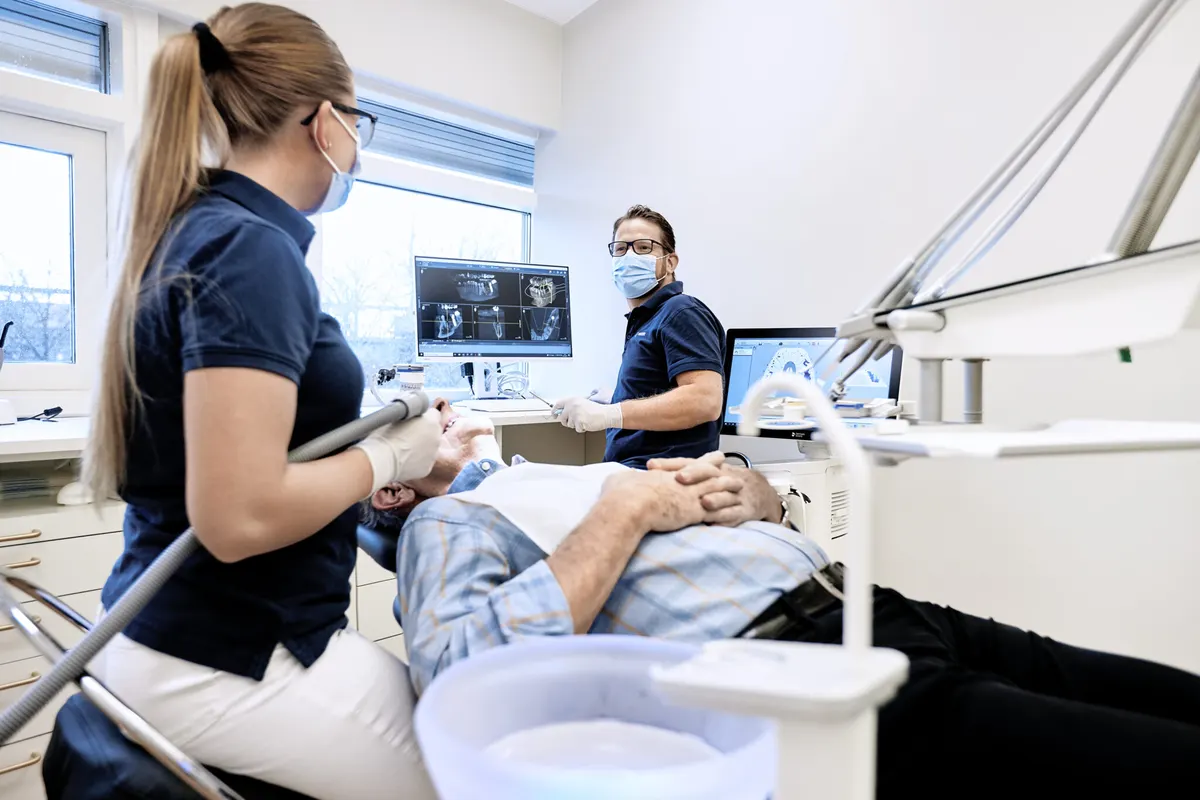
The dentist examines the patient
Twenty-six guided questions and clinical findings lead the dentist through the chairside functional examination.
Clinical TMD screening
Bitenostic guides the dentist through the clinical TMD examination while the patient is in the chair. Findings become a consistent classification, supplementary diagnoses and record-ready documentation.
From clinical findings to classification
TMD screening is the dentist's in-clinic tool. It guides questions, palpation, movement and other findings in a fixed sequence without replacing professional judgement.
Twenty-six guided questions and clinical findings lead the dentist through the chairside functional examination.
The rule-based algorithm organises findings into classes 1-9 and A-C with relevant supplementary diagnoses.
The dentist gets classification, record text, treatment support and a patient video for the next clinical decision.
The fixed examination sequence helps the dentist move from clinical findings to classes 1-9 and A-C without missing key steps.
Structured questions and rule-based scoring make the TMD examination more consistent between clinicians.
Classification, supplementary diagnoses and answers become record-ready text, while relevant videos help explain the diagnosis.
It is a guided clinical examination performed by the dentist with the patient in the clinic. Bitenostic structures the findings and calculates an indicative TMD classification.
No. TMD screening takes place in the clinic and requires the dentist's questions and clinical findings. Pre-examination questionnaires are a separate feature.
No. The classification is decision support. The dentist always evaluates it alongside the clinical examination and any need for additional investigation.
TMD covers pain and functional problems in the jaw joint and chewing muscles. Jaw joint pain is therefore one of the most common symptoms the screening helps the clinic uncover and structure.